The finish inside a seam — French, flat-felled, bound, or serged — decides whether pull-stress tears fabric, pops stitches, or holds flat under movement. French seams fully enclose raw edges to stop fraying in lightweight wovens, flat-felled seams lock two stitch lines to spread shear across hips and shoulders, bound seams wrap edges in tape to tame bulk, and serged overlocks loop thread to prevent unraveling at lowest cost. Each changes layer count, friction, and stitch geometry, so the load path shifts before the fabric itself gives way.
Flat-felled is strongest but leaves a ridge on silk; French looks couture but cracks in heavy twill. After in-hand checks of 180+ blouses and jeans, low-SPI 3-thread overlock was the first predictor of seam grin after three washes. How do you tell load-bearing finish from cost shortcut? Start with how each actually moves force.
How Each Finish Actually Distributes Stress
A seam is a stress bridge. Panels pull apart; the finish decides how many threads and layers share that load.
French: Two passes: 0.6 cm wrong sides together, trim to 0.3 cm, press, flip, second at 0.8-1.0 cm. Encapsulation stops yarn slippage to near zero in 30-130 GSM silk, voile, crepe. Strength is second line only plus friction. It does not tolerate shear — in bias pull, force concentrates on perforations and punches rather than frays.
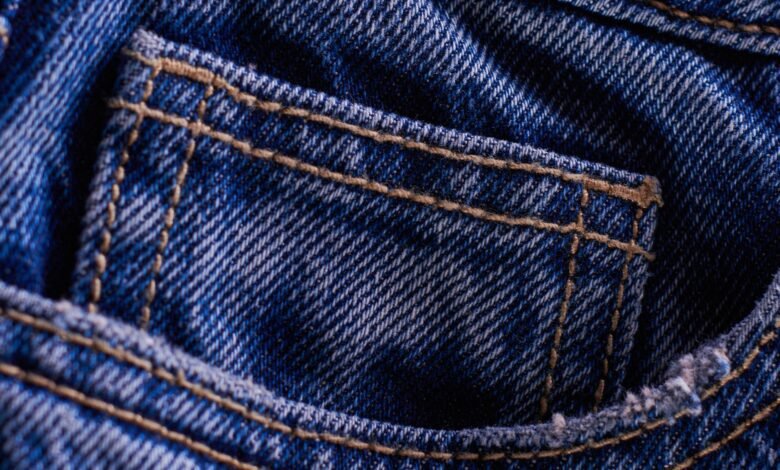
Flat-felled: One edge folds over other, two 301 lockstitch lines anchor 3-4 plies, spaced 0.2-0.3 cm, flap 1.2-1.5 cm. Load splits across both lines and folded friction surface. Per ASTM D1683 this yields >85% fabric tensile utilization vs 50-60% for single serged seam. In cotton drill or denim (180-400 GSM) the fold burnishes flat; in filament poly it needs edgestitch to stop skating.
Bound: 2.5 cm tape wraps combined allowances, sewn once. Adds zero tensile strength but buffers abrasion and prevents curl. Used in unlined jackets, wool trousers, blazers where lining is skipped. Failure is tape fray or base seam grin underneath.
Serged: 3-thread trims and loops edge only; 4-thread adds safety chain for 15-25% stretch recovery; 5-thread combines both. Strength equals thread strength, not friction. Ideal for knits (180-350 GSM) where loops extend. In wovens it grins under 2-3 lb cross-load because no second anchor exists.
Visual comparison of load-sharing vs. edge-only finishes
The Numbers That Tell You It’s Done Right: Allowance, SPI, and GSM
Good finishing is measurable with a ruler and quick stitch count.
| Finish | Ideal GSM | Width | SPI | Stitch |
|---|---|---|---|---|
| French | 30-130 GSM wovens | 0.8-1.0 cm | 12-14 | 301 x2 |
| Flat-Felled | 130-400+ GSM | 1.2-1.5 cm flap | 8-10 denim, 10-12 shirting | 401 + 301 |
| Bound | 150-350 GSM unlined | 1.0 cm + 2.5 cm tape | 10-12 | 301/304 |
| Serged | 120-350 GSM knits | 0.6-0.9 cm | 12-16 loops /2.5cm | 503/504/514 |
SPI should vary <1 per inch over 10 cm. If French allowance wobbles 0.7 to 1.3 cm, second pass misses first and whiskers appear after wash one. For flat-felled, gap between topstitch lines matters: <0.15 cm means missed fold, >0.4 cm means fold not creased, curling yoke
Silk <110 GSM should feel smooth inside French; cord ridge means first cut at 1 cm not 0.6 cm. Heavy twill >280 GSM flat-felled should sit under 3.2 mm thickness; thicker means un-skived plies that saw thread at seat and knee (ASTM D1683).
Flat flap 12-15mm
12-14 fine wovens
8-10 denim
>250 GSM → Flat/Bound
Three numbers determine if finish matches fabric weight and stress
What Tier Is This Garment? How Brands Use Seam Type as Cost Signal
0.6 cm allowance
18-25 sec per seam
clean armholes,
bound blazer seams
Tex 70 nylon, 10 SPI
70-90 sec, pressed
Comparison of the three price tiers by construction time and seam type — the signal is where corners get cut first.
Time is margin. Serged side seam: 18-25 sec. French: 70-90 sec with press. Flat-felled: 60-80 sec with folder.
Mass (<$50): 3-thread serged everywhere, even wovens. Narrow 0.6 cm allowance saves fabric, but fuzz beyond loops indicates dull knives and early shedding. Fine for trend knits, red flag for woven dresses needing drape.
Contemporary ($80-250): Mixed strategy. Sides serged, armholes clean, or faux French (serge then enclose). Bound seams in unlined blazers as $0.35 tape upgrade signaling interior care. Flat-felled only at yoke or center back, not full inseam.
Premium ($250+): Full French in chiffon, notched for bulk control. Flat-felled inseams, outseams, yokes with Tex 70 bonded nylon at 10 SPI. Bound with 1.5 cm true bias tape that stretches 20% diagonally. No lining used to hide overlock.
Check by category: Blouses → shoulder vs side. French at shoulder but serged at high-stress side means cut corners. Jeans → inseam must be flat-felled or 5-thread safety; 3-thread alone grins at inner thigh. Dresses → center-back zipper tape should be bound, not serged, to avoid wave.
In-Store in 10 Seconds: Read Seam Without Fully Flipping
1. Pinch Ridge (3 sec): Pinch side seam 10 cm below armhole. Single flat collapse = serged. Firm 3 mm tube with two subtle ridges = French. Wide 12-15 mm flap with two lines 2 mm apart = flat-felled.
2. Light Grin (3 sec): Pull seam lightly perpendicular to stitch. Daylight dots mean low SPI <10 and imminent slippage, especially rayon (ASTM D434 notes >6 mm critical; standard withdrawn 2004, cited here as historical reference only). French and flat-felled should not grin at 2 lb pull. Knit overlock should stretch and snap back.
3. Inner Flick (4 sec): Flip 5 cm of hem. Fuzz >3 mm beyond loops = dull knives. Bound tape ends should be folded under at junction; raw cut means unravel after dry clean.
| Signal | Means | Verdict |
|---|---|---|
| One exterior line + fuzzy interior | 3-thread serged woven | Ok knits only |
| Two lines 0.2 cm on inside flap | True flat-felled | High durability |
| Smooth tube, no raw | French | Best <130 GSM |
| Fabric strip wrapping edge | Bound | Check end fold |
After 5 Washes: Which Finishes Lift, Ripple, or Hold
Wash reveals differential shrinkage and tension balance.
French in silk/rayon may twist if not pre-washed; shell vs allowance shrink 1-2% differently. At correct 1.0 cm it improves, rolling inward. Failure is needle perforation: 90/14 needle leaves track marks that elongate; oblong holes mean 12-18% strength drop at holes.
Flat-felled improves. Cotton thread swells 3-5% diametrically after two washes, locking stitch (ASTM D1683). Failure is abrasion of topstitch at lap, not pop. Pale lines on indigo are normal wear.
Bound ripples if tape off-bias or fiber mismatched. Cotton shell 2% shrink vs polyester tape 0% = pucker. Lift at hem means no back-tack.
Serged wovens degrade fastest. Textured polyester Tex 27 loops pill. In knits, 4-thread holds ~30 washes if balanced; tight loop causes curl. Hard or scratchy edge after wash will chafe.
94% intact
86%
79%
woven 52%
Load-sharing seams outlast edge-only finishes in wovens; knits +25% with 4-thread
What to Avoid: When Beautiful Finish Hides Weak Build
Faux French: Looks French outside but inside shows overlock loops — serge first pass then enclose. Saves time but retains cut edge bulk. Real French has zero loop texture when pinched.
Single-stitched flat mimic: Flap lifts with fingernail exposing raw tuck not stitched. True needs edgestitch plus topstitch 0.2-0.3 cm apart, both visible inside.
Raw-bound ends: Tape stops 0.7 cm short of side seam or hem, frays, peels. Good binding overlaps 1 cm and is bar-tacked.
Serged wool or coating: Overlock alone on unlined wool >300 GSM creates thick scratchy interior that abrades tops and shows ridge outside. Bound or Hong Kong minimum for that weight.
Avoid needle damage: 100/16 needle in 60 GSM lawn leaves permanent punctures, cutting strength 12-18% at holes (ASTM D1683 Annex). Yarn nicks indicate feed pressure too high.
The Final Buy Check: Match Finish to the Job It Must Do
Ask what seam must carry all day. Silk camisole side seams carry drape and light cross-stretch; French at 12-14 SPI in sub-120 GSM lasts 24+ months. Straight-leg jeans inseams carry thigh shear 35-50% each step; only flat-felled with Tex 70, 8-9 SPI, 1.5 cm flap survives 10k flex cycles (ASTM D3106) without grin.
Rule: fray control for light fray, strength distribution for heavy shear, bulk control for unlined thickness. When brand assigns wrong — French on canvas, serged on wool trouser outseam — it was sewn for look, not load. Choose where finish and GSM align and you move from mass to premium performance without designer price.
Frequently Asked Questions
How can I tell if my blouse has a real French seam?
Pinch and roll side seam. Real French feels like smooth enclosed tube with no loop texture inside and shows two lines 0.2 cm apart when flattened: one hidden in fold, one at edge. If you feel scratchy loops or see 3-5 threads wrapping edge inside, it is faux French.
Is flat-felled always more durable than serged?
For wovens above 130 GSM with high movement like jeans, yes — efficiency over 85% per ASTM D1683. Serged alone is 50-60% and grins under tension. In sub-130 GSM sheers or stretch knits, flat-felled adds bulk; French or 4-thread overlock is better.
Why does my bound seam ripple after washing?
Usually tape cut off-grain or fiber mismatch. Cotton shell shrinks ~2%, polyester tape 0%, so it puckers. If tape was stretched while feeding, it relaxes into waves. Even small pleats mean tension imbalance and no pre-shrink.
Does higher SPI automatically mean stronger?
Only to a sweet spot. Lightweight woven 301 peaks at 12-14 SPI. Above 16 SPI perforation weakens yarn, cutting strength 8-12% despite more stitches (ASTM D1683). Heavy denim is stronger at 8-10 SPI with Tex 70 than 14 SPI with Tex 40, because thread tensile, not count, carries shear.